People have turned to crystals for comfort, protection and healing for more than six thousand years. From Sumerian lapis lazuli to the Buddha's relics, here is the story of how crystal healing began, how it travelled across the ancient world, and why it is still part of everyday life today.
Watch: the history of crystal healing in 2 minutes
Watch the history of crystal healing on TikTok
c. 4000 BC: Ancient Sumer
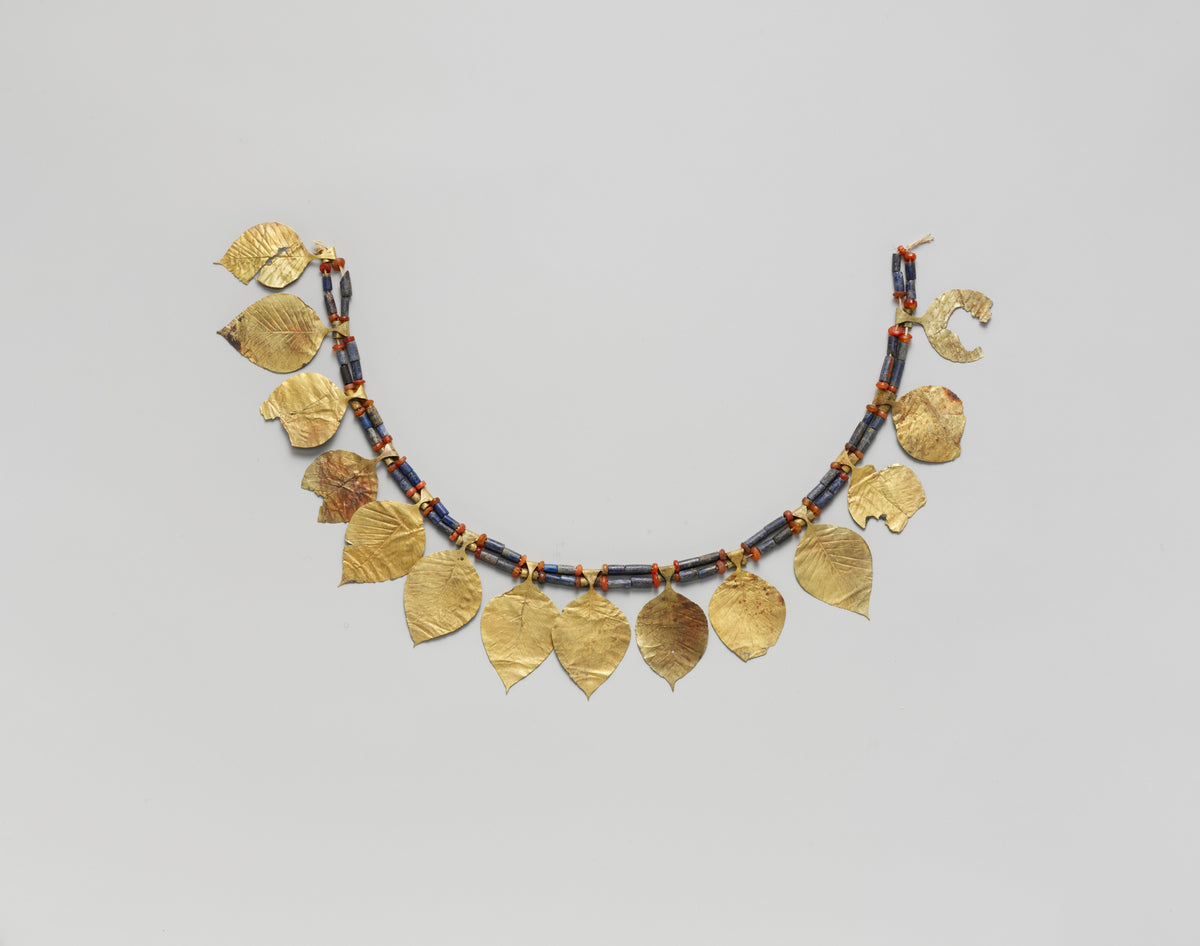
The Sumerians of ancient Mesopotamia, in what is now Iraq, are the earliest people known to have used crystals in this way. They included stones in magic formulas for protection and good health, and wore deep blue lapis lazuli and red carnelian as jewellery and amulets. Treasures from the royal tombs at Ur, made around 2600 BC, are strung with these same stones.
c. 3000 BC: Ancient Egypt
In ancient Egypt, crystals went everywhere, even into the afterlife. Lapis lazuli, carnelian, turquoise and clear quartz were carved into amulets, and heart scarabs and protective charms were placed on the body and buried with the dead to keep them safe on their journey.
c. 1500 BC: China and India
In China, jade was treasured for thousands of years as a stone of harmony, virtue and long life, carved into ritual discs and worn close to the body. In India, ancient Vedic texts linked gemstones to the planets and to the body, a tradition still seen today in the nine-gem navaratna jewellery worn for protection.
c. 400 BC: Ancient Greece and the word "crystal"
The ancient Greeks gave us the word crystal. It comes from krustallos, meaning ice, because they believed clear quartz was water frozen so deeply that it could never melt. Writers such as Theophrastus, in his book On Stones, described the properties of different gems.
The Greeks also named amethyst. It comes from amethystos, meaning "not drunk", and people wore it to keep a clear head. That link between amethyst and a calm, clear mind is one reason it is still one of the most popular crystals today. Browse our amethyst collection.
c. 240 BC: The Buddha's relics
One of the most remarkable finds came from Piprahwa, in northern India, near the Buddha's birthplace. In 1898, the excavation of an ancient stupa revealed bone fragments believed to be the Buddha's own remains. They had been laid in reliquaries, one carved from rock crystal, alongside hundreds of gems, including amethyst and pearls, around 2,200 years ago.
The gems made headlines around the world in 2025, when a planned auction in Hong Kong was halted after objections from the Indian government and Buddhist leaders. They were bought by an Indian company and returned to India after 127 years, where they will be on public display.
AD 1100s: Medieval Europe
In medieval Europe, books called lapidaries listed the powers of every stone, and remained popular for centuries. The abbess Hildegard of Bingen wrote about using stones for comfort and care in her 12th-century work Physica, and rock crystal was set into reliquaries, crosses and treasures across the continent.
1970s and 80s: The New Age revival
Interest in crystal healing faded as modern science grew, but in the 1970s and 80s the New Age movement brought it back, drawing on European folk traditions, Indian texts and Indigenous practices. Today crystals are part of everyday wellness, from a bedside amethyst to a morning meditation.
Today: calm, focus and intention
It is worth being clear: science hasn't found evidence that crystals heal, and studies suggest people feel the same effects with crystals and identical-looking placebo stones. But for thousands of years, crystals have helped people slow down, find calm and set an intention, and they bring natural beauty into a home that few other objects can match. If you are new to crystals, our guide on how to choose an amethyst geode is a good place to start, and you can also read about pink amethyst vs rose quartz.
Find your crystal
Every piece in our shop is a natural, one-of-a-kind crystal, photographed individually and listed with its exact size and weight. Explore our amethyst geodes, pink amethyst and statement pieces, or book a private viewing at our showroom in Hove, near Brighton. UK delivery is free on orders of £100 or more.
Featured image: Sumerian necklace from the royal tombs at Ur, c. 2600 BC, The Metropolitan Museum of Art (Open Access). Video images: The Metropolitan Museum of Art (Open Access); Wikimedia Commons, including public-domain 1898 photographs of the Piprahwa reliquaries and amethyst photographs by James St. John (CC BY 2.0) and Ra'ike (CC BY 2.5).